
- Turkeys are capable of running up to 18 mph and flying in short bursts up to 50-60 mph.
- In the early 1900s, wild turkeys were on the brink of extinction, with only about 200,000 left. Through conservation efforts over the past century, with funds derived from the Pittman-Robertson Act, and thanks to sportsmen and women, there are approximately 6.5 million wild birds in the United States today, according to the National Wild Turkey Federation
- Turkeys make a variety of different sounds including “purrs,” “yelps,” and “kee-kees.” Contrary to popular belief, it’s not just male turkeys that gobble. Female turkeys gobble too! Male turkeys are called “toms” while females are called “hens.”
- Among the more surprising facts about turkeys is that they have three times better vision than humans. They can also see in color, and their eyesight covers 270 degrees.
- 46 million turkeys are killed each year for Thanksgiving. That’s about one turkey for every person in Spain. To add, each turkey weighs about 30 pounds on average, which means Americans will consume 1.4 billion pounds of turkey.
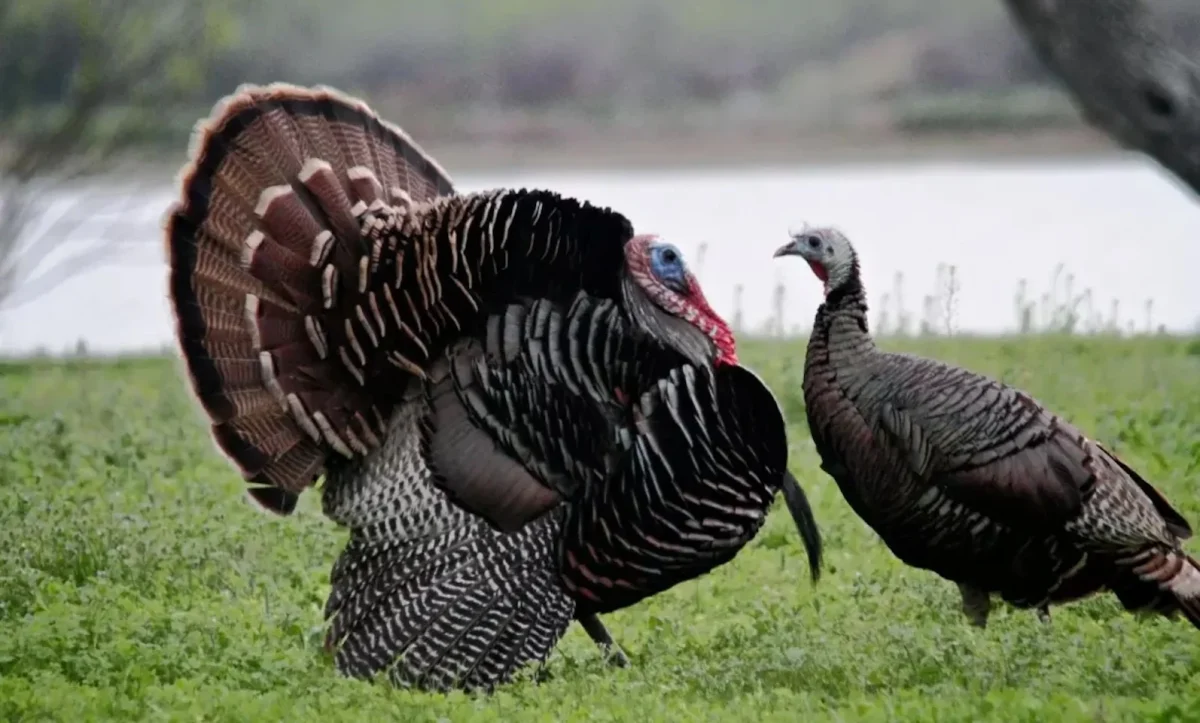
- Male turkeys can weigh up to 25 pounds, while the average female is around half that weight. Despite this heft and their reputation for being ground dwellers, Wild Turkeys often roost overnight in trees to avoid predators.
- Did you know you can discern a turkey’s sex from its droppings? It’s true. Male scat is shaped like the letter J, while a female’s droppings are more spiral-shaped. And the bigger the poop, the older the bird.
- Animals are often thought of as voiceless, but they have plenty of ways to speak their minds to each other and to us—and turkeys are no exception. Turkey vocabulary includes 28 distinct calls, and turkeys can communicate their different meanings by varying delivery and intensity.
- Culture among animals is defined as the ability to share and learn behaviors—information passed through generations, much like in human families and communities. Turkeys learn complex behaviors from each other.
- Octopuses, chameleons and iguanas are among the animals widely known for their ability to camouflage themselves, blending in with their environments. Well, turkeys change colors, too! The hue of their skin conveys different moods and emotional states, as turkey’s heads change colors depending on what they’re doing or who they’re trying to impress. Male turkeys become redder (seen below on Mateo) when courting females or in confrontational interactions with other males.
Categories:
10 Incredible Turkey Facts
How much do you know about Thanksgiving’s most popular dish?
Donate to Bear Necessities News
Your donation will support the student journalists of Chittenango High School. Your contribution will allow us to purchase equipment and cover our annual website hosting costs.
More to Discover



About the Contributor

Erica Ezzo, Staff Writer
Erica Ezzo is a Senior at Chittenango High School and it’s her first year of broadcasting and media. She is on the varsity tennis team and enjoys listening to music and hanging out with friends. She looks forward to revisiting London in the future.